Togog
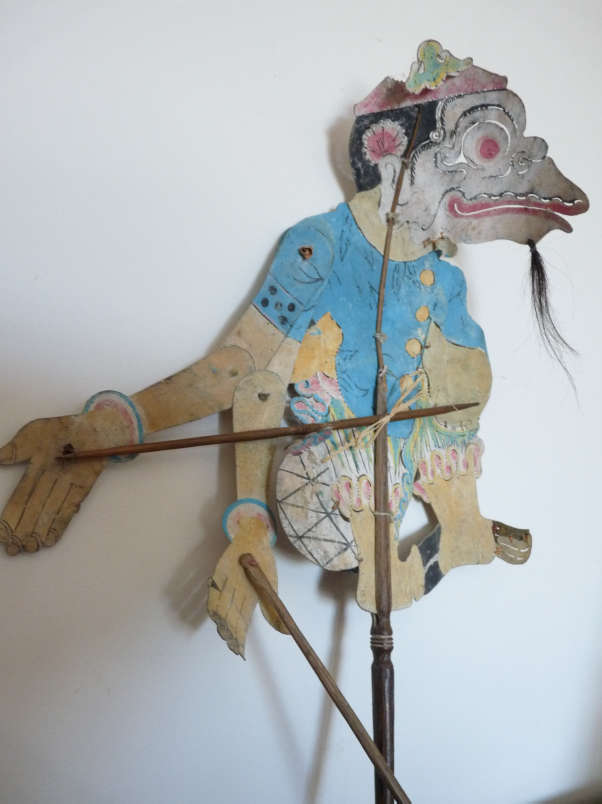
Togog is one of the lesser used members of the Punakawan class of wayang characters, which are perhaps the most important Javanese addition to the Ramayana and Mahabharata epics.
The punakawan are the loyal retainers of the hero or heroine of wayang performances, that is those on the dalang's righthand side, which includes the Pandawa and their allies.While punakawan literally means 'attendants,' in common usage it is usually applied to four specific characters: Semar and his adopted sons Gareng, Petruk and Bagongand less frequently to other clown servants. The punakawan perform slapstick comedy and make funny asides about the main drama that unfolds, together with comments about contemporary social life and politics. As such, they are generally understood to represent the perspectives and opinions of the audience itself, and are usually the most popular characters in any performance. This is not to say, however, that they are weak or marginal figures - Semar, the father of the other primary punakawan, is a god descended to earth who has magical power.
Togog, who in this case is represented in the Banyumas style with white face and hair beard, is less commonly seen but nearly as powerful as Semar, who is his younger brother. According to wayang lore, the four sons of the paramount god were born from a single egg: Togog, the eldest, was the shell, Bilung the membrane, Semar the white, and Battara Guru (the only one to take a conventional godlike form in wayang) the yolk. This version of the Togog character is also dressed in a somewhat oldfashioned version of a village politician's outfit, which reflects the political importance of the character and the local
Image: 40cm (60cm with handle) x ~27.5cm; water buffalo hide,wood, hair, pigment.
Nelson South East Asia Collection © 2025