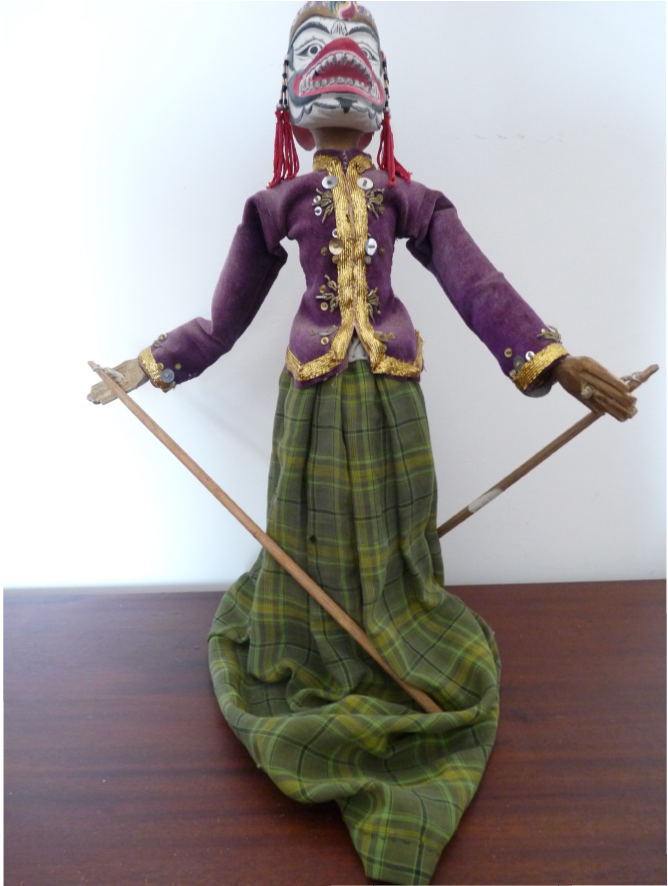
Wayang Golek
Wayang golek are three-dimensional wooden puppets that are operated from below by rods connected to the hands and a central control rod that runs through the body to the head. Despite this simple construction, the puppets can be made to perform with considerable versatility and expressiveness, particularly in imitating human dance. Because of their three-dimensional form and comparative uniformity of shape, wayang golek are generally used for daytime performances, as opposed to wayang kulit, which are usually used at night. Today, wayang golek is mainly associated with Sundanese culture of West Java.
The origins and early development of wayang golek are not known for certain, but current scholarly consensus is that it probably originated in China and arrived in Java sometime in the 17th century. Some of the oldest traditions of wayang golek are from the north coast of Java, where some of the oldest Muslim kingdoms in Java were located. It is likely the wayang golek grew in popularity as a vehicle for Serat Menak, or stories of Amir Hamza, the uncle of Muhammad. Despite religious proscriptions on the depiction of the human form, popular origin stories of wayang golek attribute their invention to the Muslim saintWali Sunan Kudus, who used the medium to proselytize Muslim values. Today, however, wayang golek are most commonly used to perform the Hindu epics.
The production of wayang golek puppets, like that of wayang kulit, is a communal undertaking. Usually the master carver is responsible only for the puppet’s head, while the bodies and jointed arms are made by younger or less experienced family members and the clothing by female artists.
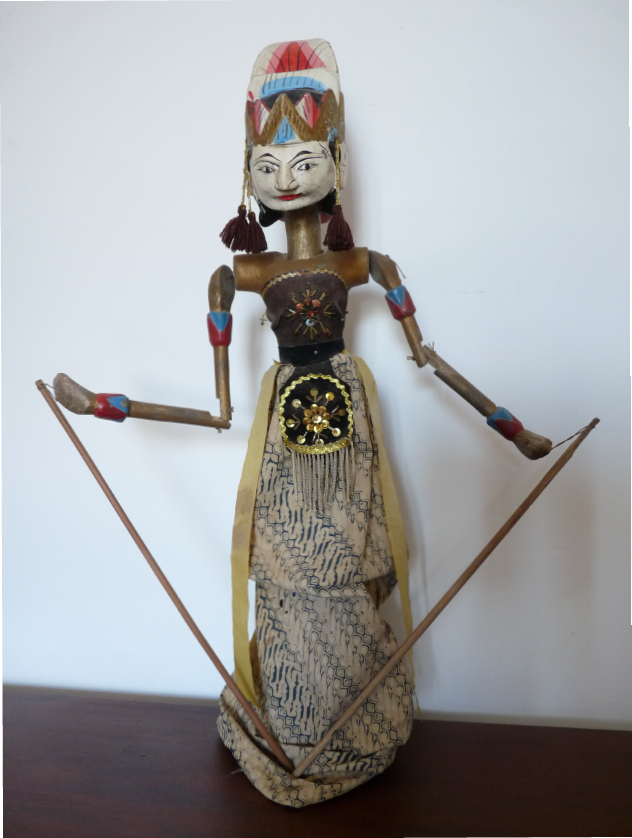
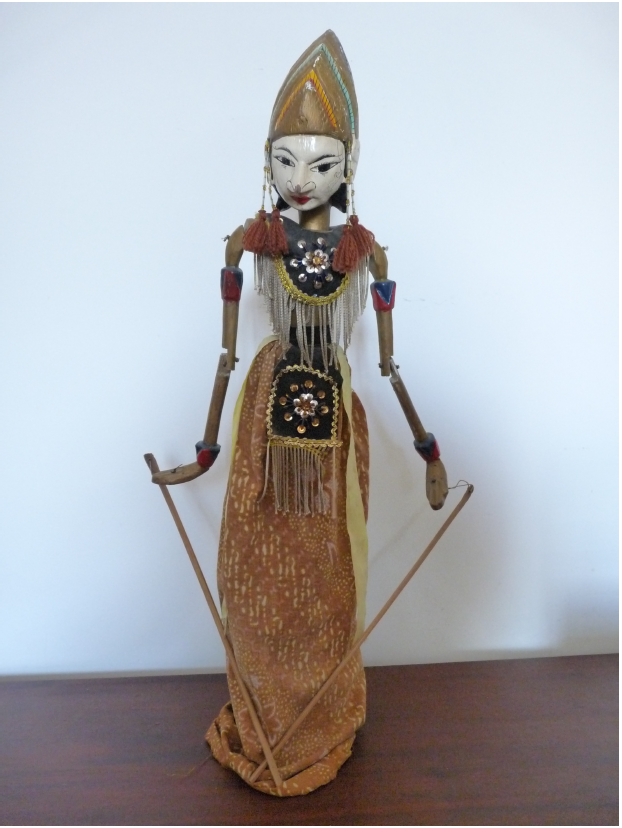
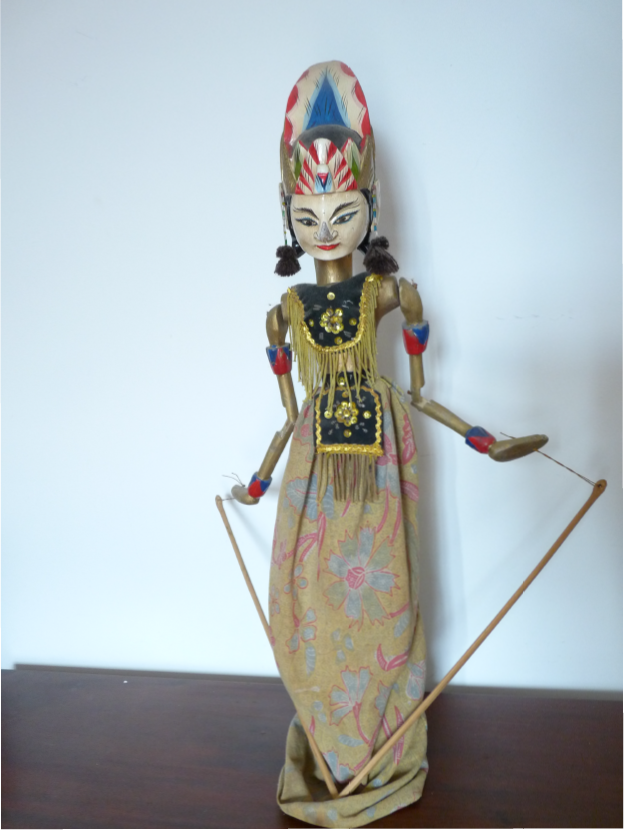
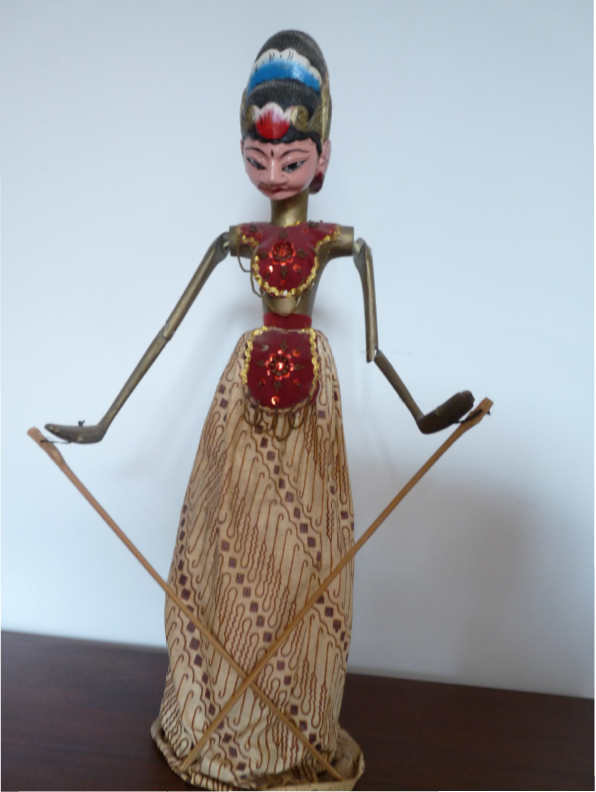
Nelson South East Asia Collection © 2025