Wayang Kulit
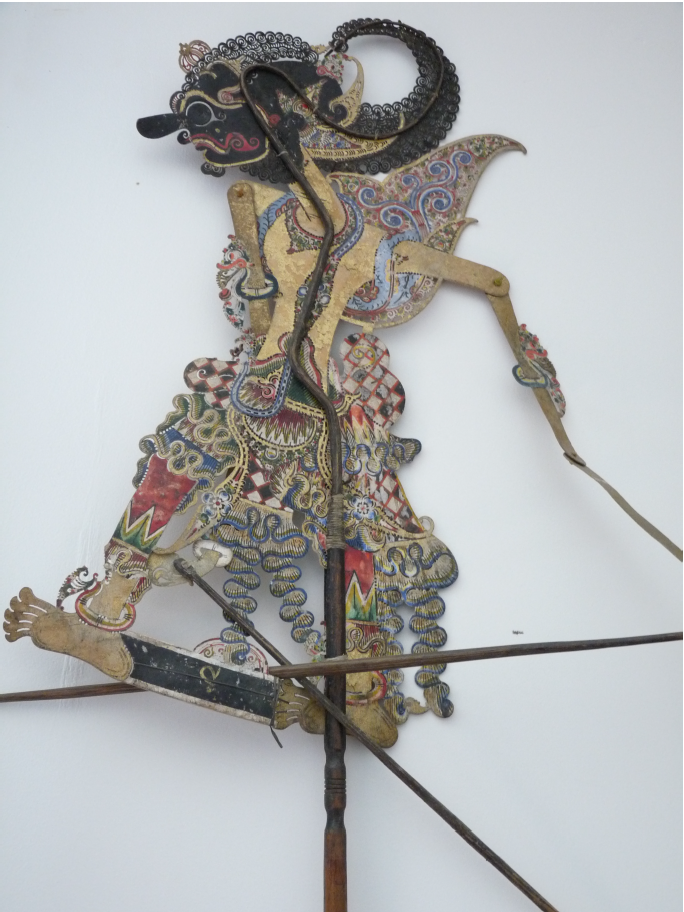
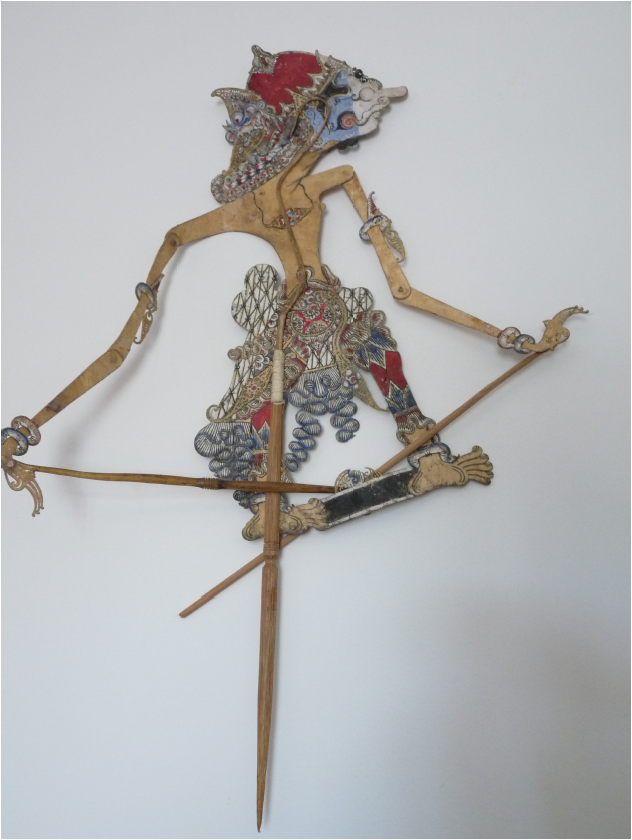
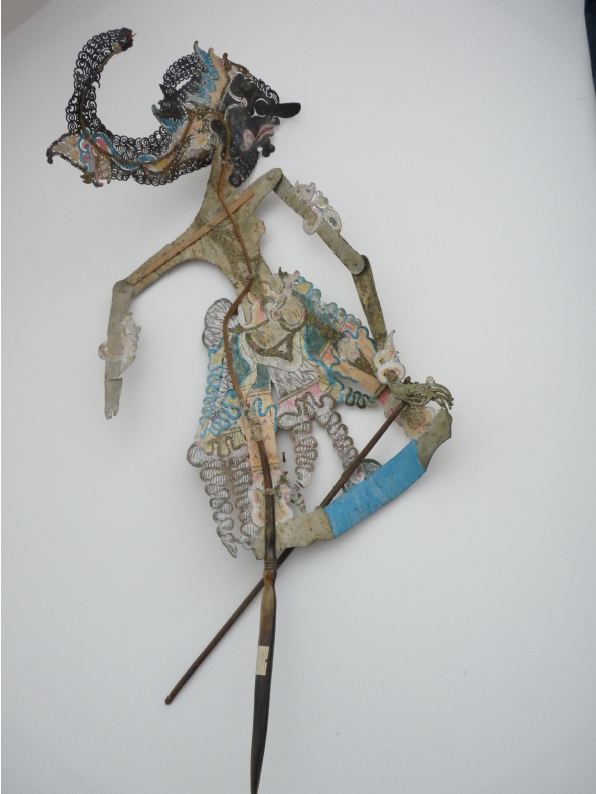
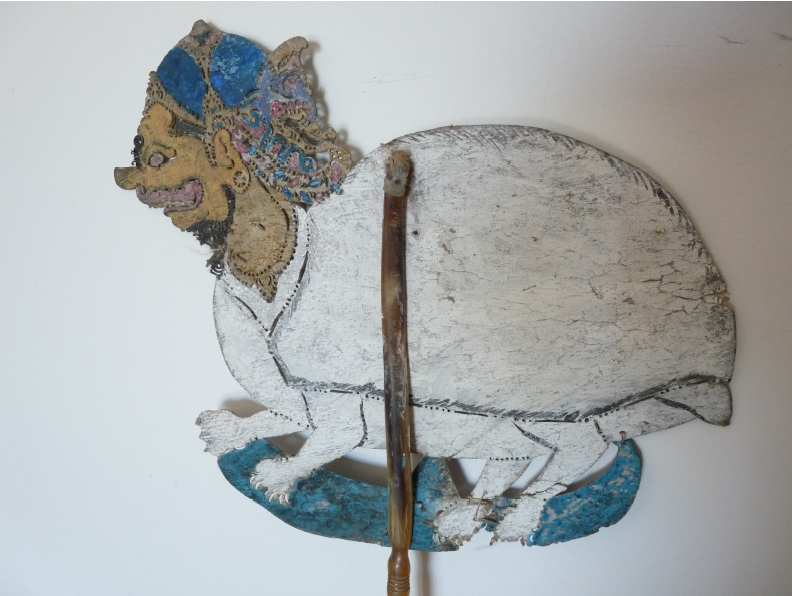
Kulit means skin, and refers to the leather construction of the puppets, which are intricately cut, chiselled and pierced with very fine tools and supported with shaped bamboo or buffalo horn handles and control rods.When held up behind a piece of sheer white cloth, with an electric bulb or an oil lamp as the light source, shadows are cast on the screen. Though wayang puppets tend to be richly and intricately painted, the audience is meant to view the performance from the front, where only shadows are visible.
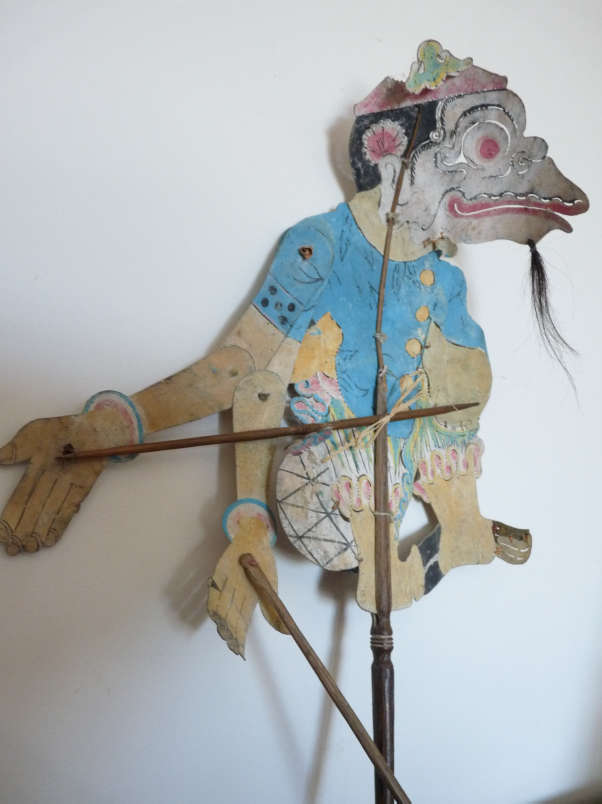
Though the stories performed in wayang kulit are almost exclusively from the Ramayana, the Mahabharata, or the Serat Menak (a story about the heroic exploits of Amir Hamza, an uncle and companion of the Prophet Muhammad), many uniquely Javanese elements have been incorporated. Along with local interpretations of classical themese, there is a family of characters in Javanese wayang called Punakawan; they are sometimes referred to as "clownservants" because they normally are associated with the story's hero, and provide humorous and philosophical interludes. They provide something akin to a political cabaret, dealing with gossip and contemporary affairs, and are an integral part of any wayang performance.
The puppet figures themselves vary from place to place. In Central Java the city of Surakarta (Solo) and city of Yogyakarta are most famous and the most commonly imitated style of puppets. Regional styles of shadow puppets can also be found in West Java, Banyumas, Cirebon, Semarang, and East Java. Bali produces more compact and naturalistic figures, and Lombok has figures representing real people. Contemporary objects such as bicycles, automobiles, airplanes and ships will often be added for comic effect, but for the most part the traditional puppet designs have changed little in the last 300 years. Historically, the performance consisted of shadows cast on a cotton screen and an oil lamp. Today, the source of light used in wayang performance in Java is most often a halogen electric light.
The work involved in making a wayang kulit figure that is suitable for a performance takes several weeks, with the artists working together in groups. They start from master models (typically on paper) which are traced out onto skin or parchment, providing the figures with an outline and with indications of any holes that will need to be cut (such as for the mouth or eyes). The figures are then smoothed, usually with a glass bottle, and primed. The structure is inspected and eventually the details are worked through. A further smoothing follows before individual painting, which is undertaken by yet another craftsman. Finally, the movable parts (upper arms, lower arms with hands and the associated sticks for manipulation) mounted on the body, which has a central staff by which it is held.
Nelson South East Asia Collection © 2025